Showing posts with label flood resilience. Show all posts

Monday, 2 February 2015

‘Know Your Flood Risk’ to address GovKnow Flooding Policy Briefing

“Responding to the Growing Risks of Flooding and Coastal Erosion”
5th February 2015
Carburton Street, London

Mary Dhonau OBE, the chief executive of the Know Your Flood Risk campaign has been invited to speak at a GovKnow Policy Briefing, which will address the growing risk of flooding and coastal erosion across the UK.

The in-depth, policy-led briefing, which takes place on 5 February in London, brings together key policy makers, shapers and stakeholders who have an interest or involvement in managing flood risk and coastal protection, including local authorities, emergency services, business owners based in high-risk locations and policy makers.

Mary Dhonau OBE, who has personally experienced the appalling impact of flooding, will be talking to delegates about how to plan, prepare and mitigate against the risk of flooding, including analysing what information is available to accurately calculate the current and future dangers posed by flooding in specific locations, from county-level down to individual postcodes, communities or streets.
Confirms Mary: “Know Your Flood Risk works with major data providers, including Landmark Information Group, to maintain up to date flood risk modelling data. This ensures that detailed and accurate risk information is accessible on the different types and levels of flood risk across the country.  It is vital that homeowners, local authorities, the emergency services and policy makers are fully aware of how to calculate your flood risk at a community level, and if a risk is present what can be done to help prevent or mitigate against future flood risk.”

Know Your Flood Risk provides information and support on flood recovery and general flood resilience via its acclaimed guides. As part of its bid to educate homeowners, public sector organisations and businesses on their flood risk, Know Your Flood Risk provides access to flood reports, powered by Landmark Information Group’s flood risk data, which enables individuals to assess the flood risk to individual properties, streets, towns or regions. 

With Government figures suggesting that nearly one in six properties in England is at risk of flooding and that flood damage cost England alone £1.1 billion a year, the GovKnow event will examine the threat of flooding and coastal change, re-evaluate the policies and discuss the recent changes, providing a comprehensive insight into what is considered a complex policy issue.

To find out more about the Know Your Flood Risk campaign, or to download a number of free advice guides, visit:  www.knowyourfloodrisk.co.uk

GovKnow Briefing Location: Holiday Inn Regents Park, Carburton Street, London, W1W 5EE
Date: 5 February 2015
Bookings: To book your place at the briefing, click here:


Wednesday, 21 January 2015

Flood Free Homes


I have firsthand experience of being repeatedly flooded out of my home. The ravages of floodwater can have far-reaching consequences for everyone affected, not only in terms of the physical damage caused but also less obvious issues, such as stress and depression.

The first bleak walk back into your waterlogged home is so hard to comprehend, if you’ve not been through it yourself. Your belongings are covered with a thick brown sludge, your furniture is sodden and your home stinks. You watch helplessly as everything you have worked so hard for is thrown into a skip. Worse still, you lose items that no insurance policy can ever replace: a child’s first drawings; photographs of relatives who are no longer with us; and it is these experiences that are heart-breaking.

"Since the 1990’s, when my first flood happened, I have spoken to and visited countless people who have their lives devastated by being flooded. They have spoken to me of their utter despair at having lost their home, their ‘sanctuary’, in this way. Flood water is a silent, indiscriminate burglar that takes no prisoners, and doesn’t care whether its victims are the young, old, disabled, rich or poor. It seems to malevolently wreck the lives of thousands of people, year in, year out. It is impossible to put an accurate price tag on the cost of being flooded, but so many people tell me that it the worst singular experience in their lives and the memory of it will stay with them forever.

Extreme weather events are becoming too common place to be ignored, and flooding is the biggest natural threat faced by the UK. It is my belief that flooding is already happening more regularly and last winter’s endless TV footage clearly demonstrated the demands made on our country by the wettest winter on record accompanied by high tidal surges. Never has it been more essential to invest in both building and maintaining flood defences. If we are to avoid vast swathes of the country being brought to its knees on a regular basis then we must invest heavily in all aspects of flood risk management.

In this small country of ours, we have already built too many homes in inappropriate places and the knock on effect on individuals and communities has been devastating and costly. It is time to put an end to this short-sighted irresponsibility. We urgently need a cross party consensus for managing floods, one that will address all forms of flood risk, one with an ambitious  long term goal that will embrace innovation and investment to reduce flood risk."

Mary Dhonau OBE HonRICS
Chief Executive Know Your Flood Risk Campaign


Chair of the Flood Protection Group The Property Care Association

Monday, 19 January 2015

‘Mary Queen of Floods’ makes waves at Whitehall

Reception held at the House of Commons heard calls for an end to housing development on flood plains and increased flood risk funding
On January 20th, the Association of British Insurers (ABI) launched its Flood Free Homes campaign, which raises the issue of long term investment in flood defence and land and water management. ABI is calling for £1 billion per year to be spent on managing flood risk by 2025; cross party consensus on long term solutions; and an end to new developments in areas at risk of flooding. The campaign launched at the House of Commons yesterday, is supported by Know Your Flood Risk, Friends of the Earth, National Flood Forum, the Property Care Association’s Flood Protection Group.
Mary Dhonau, OBE, chief executive of Know Your Flood Risk, was asked to speak at the House of Commons reception, attended by forty MPs. Mary met with Roger Williams, MP, to discuss the current risk to homeowners, based on the latest flood risk modelling data, and joined ABI’s call for an end to housing development on flood plains and an increase in government funding for flood risk management.
Know Your Flood Risk works to raise awareness of flood risk, by lobbying the government and the insurance industry and providing homeowners and businesses with practical guidance on their risk of flooding and how to mitigate the risk of their properties being flooded. As part of its mission to inform home owners of the risk to their property, Know Your Flood Risk works with major data providers, including Landmark Information Group, to maintain up to date flood risk modelling data and ensure that property owners have access to information on the different types and levels of flood risk. 
Environment Agency data shows that approximately 2 million homes in England and Wales are at risk of river and sea flooding, with an additional 2.4 million homes at risk of surface water flooding. One in four homes in the UK are at risk of surface water flooding and ground water flooding, as well as wave overtopping. However, a survey undertaken by the Know Your Flood Risk Campaign revealed that 83 per cent of homeowners do not believe their homes are at risk of flooding and 68 per cent had no measures in place to minimise the risk to their home. Importantly, although 95 per cent of homeowners surveyed by Know Your Flood Risk had contents insurance, 45 per cent do not know whether their insurance policy covers flood damage. 
In addition to advising homeowners on their flood risk, Know Your Flood Risk provides information and support on flood recovery and general flood resilience via its acclaimed guides. As part of its bid to educate homeowners and businesses on their flood risk, Know Your Flood Risk provides access to flood reports, powered by Landmark Information Group’s flood risk data, which enables owners to assess the flood risk to their individual property.
Explaining the key issues behind the Know Your Flood Risk campaign, Mary Dhonau said, “Never has it been more essential to invest in both building and maintaining flood defences. If we are to avoid vast swathes of the country being brought to its knees on a regular basis, then we must invest heavily in all aspects of flood risk management.”
“Too many homes have been built in inappropriate places and the knock on effect on individuals and communities has been devastating and costly. We urgently need a cross party consensus for managing floods, one that will address all forms of flood risk, one with an ambitious  long term goal that will embrace innovation and investment to reduce flood risk.”
In follow up to the reception at the House of Commons, Mary Dhonau will publish a blog on ABI’s Flood Free Homes campaign website, in which she shares her personal experiences of having her home flooded and echoes ABI’s calls for increased investment in flood defences and flood risk management and an end to building new properties in areas at risk of flooding.

Friday, 28 November 2014

What Is It Like To Flood?

On the 4th and 5th of December, the Flood Defence & Prevention Expo presents a range of solutions to widespread flooding problems from many of the UK’s leading flood prevention companies and experts.  The two day-event, which is taking place at the Excel Centre in London, is also hosting an extensive seminar and workshop programme to highlight new, cost-effective ways to help prevent and manage floods.

Mary Dhonau OBE, Chief Executive of the ‘Know Your Flood Risk’ campaign – which is supported by Landmark Information Group – will be speaking at the event.   During the Flood Defence Expo, Mary will be discussing what it's like to flood, how to plan, prepare and mitigate for it. 

Mary has been flooded herself on many occasions and has extensive experience in supporting and advising the victims of flooding during their recovery.
Mary Dhonau OBE
Explains Mary: “Being flooded is an appalling experience! The presentation will describe what individuals who do flood have to go through and will go on to give examples of how to plan, prepare, mitigate and become resilient to being flooded. I will also be urging everyone to download a copy of Know Your Flood Risk’s free Guide to Flood Resilience, which is the best guide of its type in the country for providing practical, hands-on advice to identifying your risk, through to putting measures in place to resist and overcome future floods from impacting your lives.”

Mary has represented the ‘voice of the flood victim’ for many years and is affectionately known as `Mary Queen of Floods`. She was awarded an OBE for services to the environment in the Queen`s Birthday Honours list in 2009.

In addition to her role as Chief Executive of Know Your Flood Risk, Mary also chairs the Flood Protection Group for the Property Care Association, and is a member of the Regional Flood and Coastal committee for Anglian Northern.   She also runs a consultancy (MD Associates) specialising in raising awareness of flood risk, how to militate against it and recover from it.

Mary’s presentation takes place on Thursday 4 December @ 14:00 in Seminar Hall Three.

To find out more about the Flood Defence Expo or to book tickets to attend, visit http://www.flooddefenceexpo.co.uk/.


Friday, 8 August 2014

Flood - Myth or reality?

With flooding increasingly in the news, you could be forgiven for thinking that the nature and extent of the problem in this country is getting worse. The issue is particularly pertinent for those contemplating a new property purchase. The recent Planning Practice Guidance from the Department for Communities and Local Government has certainly raised awareness of the need to take flooding hazards seriously, thereby significantly reinforcing the need for good quality data and advice.

So, should we believe the shock headlines?  What is the reality, and how does one establish whether a particular property will face costly and life-threatening hazards, or whether the perceived risk may be unfounded and won’t impact on the use or enjoyment of the property at all?

Being well briefed on the degree of risk is key to making investment decisions, and this is where the quality of information can make all the difference.  One company that has invested significantly in obtaining in-depth, reliable data is Landmark Information Group, which uses the statistics as the basis of its reports on flood mapping, which in turn are used by property developers and planning consultants to support property investment decisions.

However, we need to be clear on terms. There are many different flooding mechanisms, but flooding typically results from the interplay of a number of different variables at any one point. Breaking down flood risk according to only a single mechanism is unhelpful, and results largely from a fragmented approach to mapping the problem.  

What is a Flood and how does it impact on property?

A flood is described as "where land not normally covered by water becomes covered by water."

Flooding can happen even if you don't live near a river, sea or watercourse.  During periods of heavy rain the capacity of the ground to infiltrate rainfall can be exceeded, and drainage systems can become overwhelmed by the high rate of water reaching them in a short time. Furthermore if the ground is already saturated then the runoff will be enhanced and more rapid.

Flooding can devastate lives and cause serious damage to your property.  It is common sense to avoid purchasing a property in a flood risk area, but with careful consideration and accurate assessment it might be that the risks are minimal and acceptable and can be managed to prevent intolerable damage and risk of injury. In this case, you could still proceed with caution. 

First and foremost however, if you are a property owner in a flood prone area it is essential that you understand whether you are at risk, so access to good quality data is vital.  If you live in an area at risk it is important to plan in advance for flooding that could occur.

Being prepared can make all the difference and is your most powerful tool for dealing with flooding.  This can include:

  • Registering with the Environment Agency’s flood warning scheme (https://fwd.environment-agency.gov.uk/app/olr/register)
  • Prepare a Flood Evacuation Plan;
  • Undertake a property level survey to establish likely points of water entry;
  • Incorporate permanent Flood Resistance measures designed to keep water out. Some examples include raising water resisting external doors and windows, raising thresholds, sealant around external doors, windows, walls and service entry point;
  • Incorporate temporary Flood Resistance measures designed to keep water out. Some examples include the use of sand bags, de-mountable or free-standing barriers and appliance vent covers;
  • Incorporate Flood Resilience measures – designed to permit water entry but designing the interior of buildings to minimise damage and speed up the clean-up operation.  Some examples include water compatible internal walls and floors, raised utilities, and removable fixtures and fittings.


The six types of flood risk that all prospective purchasers need to be aware of
1)    River (Fluvial) flooding: Inundation from rivers and watercourses, usually due to excessive runoff from rainfall, leading to overtopping of river banks. This can also occur from inundation of areas outside the floodplain due to the influence of bridges, embankments, and other features that artificially raise water levels.

River flooding usually impacts adjacent low-lying properties and can cause widespread and extensive damage due to the large volume of water and high velocity of flow.  Debris can also cause further damage and, depending on the setting, flooding can ‘back up’ in the catchment area and become longer-lasting and more difficult to drain away. Fast-flowing floodwaters can also be a threat to peoples' and animals' safety and can damage or even demolish buildings.  The Environment Agency estimates that, when combined with coastal flooding, about 2.4 million properties in England are at risk.

2)    Surface water (pluvial) flooding: Usually associated with extreme rainfall, but may also occur when rain falls on land that is already saturated or has a low permeability. In each case, the rainfall generates overland flow which can lead to flooding before the runoff is able to enter a drain, sewer or watercourse.

It may be triggered or made worse in urban areas where the ground consists of hard surfaces such as concrete or tarmac. It is estimated by the Environment Agency that beyond those in the fluvial risk areas above, a further 2.6 million properties are at risk of surface water flooding in England.  Extensive flash flooding of this type can follow periods of high intensity rainfall, and the harm to property is related to local features in the immediate vicinity rather than overall position in the catchment.  The lack of warning can be a particular problem.  However, due to the flash nature of this type of flood, it may recede as quickly as it arrived, and the damage to property may be less serious if the mopping-up and drying-out process can proceed quickly.  Also, it may affect your garden and the street rather than your home, and features as simple as a raised kerb may provide property level protection, although it would be wise to review how reliable these protections are.

3)    Groundwater flooding: Occurs when the water table rises after prolonged rainfall, only to emerge above ground level away from a watercourse, or where high river levels drive water through the river banks. This is most likely to occur in areas underlain by permeable rock, and can seep directly into properties or exacerbate other forms of flooding. 

This type of flooding can last for weeks, leading to a higher degree of harm to buildings because of the impact on the fabric of the building from prolonged saturation.  Groundwater flooding is more of a seasonal issue because most aquifers need several weeks of high recharge to fill up before the water table overflows. 

Irrespective of whether water shows at the surface, rising groundwater levels are posing an increased threat to buildings with basements. Such flooding may occur separately or in conjunction with flooding from other sources, such as surface water flooding. ESI estimates that up to one third of flooding problems in the UK are due to groundwater, which typically causes more property damage than other forms of flooding, making this one of the major flood risks when it comes to property.  However, the Environment Agency are yet to include this data on their maps, so we cannot yet put this risk into the same context as their mapped 5M properties in England within areas at risk of fluvial and pluvial flooding.

Thankfully, the slower flow rates associated with groundwater mean that risk to life is significantly lower.  Nevertheless, information on groundwater is clearly vital to the overall understanding of flood risk and, with the Environment Agency reporting that last winter 24% of flooding was caused by groundwater, prospective purchasers need to review the data carefully.

4)    Coastal flooding: Caused by high tides and/or inclement weather breaching sea defences and inundating the surrounding area.  It can also cause backing up in rivers and groundwater systems that will then flood upstream.  Coastal flooding may affect not only a property on the coast itself, but also property in tidal rivers some distance inland, due to floodwater being forced up the tidal reaches of rivers and estuaries by raised sea levels and gales. 

Coastal flooding is often associated with high energy storm events, posing a very real risk to life.  Those considering purchasing a coastal property, particularly where the coastline is very exposed to storms, should review mapped flood zones carefully and consider the wider disruption that could arise, as well as whether flood water could reach within their own property boundaries.

5)    Sewer flooding: Sewers are generally not sealed and during periods of extreme rainfall can overflow into the surrounding subsurface, ground surface, or into properties via drains, toilets and basements, causing considerable and costly damage, along with many unpleasant and harmful consequences.

Groundwater can be the decisive factor, and typically the cause is too much water entering the sewers from storm run off, or where rising groundwater may infiltrate the sewer network.  Many of the water companies have access to the ESI national groundwater flood risk data and this is helping them to implement sewer infiltration reduction plans that should help to reduce this problem over the next five years, but sewer flooding currently remains a very significant problem in some areas.

6)    Reservoir flooding: The UK has approximately 5,000 reservoirs, and flooding can occur if there is a catastrophic failure of a reservoir wall or embankment. Fortunately dam failures in the UK are rare, but have occurred to considerable catastrophic effect in the past.   While the chances of reservoir failure are very small, the consequences could be fatal and affect large areas many miles from the dam itself.

Is flood risk increasing?

There are several aspects to this:

1)    Some risks such as groundwater flooding have been largely ignored, but new data has demonstrated the full nature and extent of the problem, in turn leading to increased recognition of a risk that has always been present.  This is good news because the data enables risk management action to be taken and problem locations can either be avoided or mitigation measures incorporated.

2)    Climate change is leading to rising sea levels, and these in turn increase coastal flooding risk.  There is a very real increase in risk over time, but the fact that it is largely predictable means that the problems can be managed if attention is paid now.

3)    Climate change is leading to different rainfall patterns in the UK, with long-term averages over a 30-year period showing an increase in annual rainfall of about 5% from 1961-1990 to 1981-2010.   Preliminary research from the Met Office suggests we may have also seen a change in the nature of the rain we get, with 'extreme' daily rainfall becoming more frequent.

Increased rainfall can lead to an increased likelihood of flooding, and there is a very real threat that the risk will increase over time. However, it is highly uncertain in its impact due to limitations in climate prediction models.  The latest work from the Climate Change Committee, for example, suggests that the risk of flash flooding may increase in frequency due to more high intensity rainfall, but severity may remain at similar levels.

4)    In the case of groundwater there may be a real increase in the number of areas that are at risk due to the impact of seasonal recharge of the aquifer and the increase in wet winters.  Clearly more work is needed, but in the meantime a precautionary approach is sensible, and a ‘factor of safety’ is recommended.

5)    Catchments are changing.  Over many decades, urban development the increased amount of ‘impermeable surfaces’ and led to more runoff in catchments where the natural catchment response would be more attenuated and less flood-prone. The recent move towards sustainable urban drainage systems (SuDS) such as attenuation ponds and soakaways is intended to return catchments partly back to their natural state to reduce flood risk, but the regulations have been delayed by Defra so are not yet fully in force.

6)    Traditionally flood defence designs used over-sized flood channels engineered to remove water as fast as possible, but these did not sufficiently recognise the impact further downstream this may cause.

In summary, we have seen some increase in certain risks, but the biggest change in recent years is actually the recent increased access to better data, and in general this is helping us to more accurately identify risks that have always been present.  A flood risk map such as that provided by Landmark Information Group can form part of a structured risk assessment process enabling those advising on property purchases to decide whether the next steps indicated by the initial risk screening report towards site-specific risk assessment, or risk mitigation measures, or indeed in extreme cases, withdrawal from the purchase process, are warranted.

What to do next if your proposed purchase falls within any mapped flood zone?

If the property has been identified as located in an area at risk, it is important to appreciate that this does not automatically mean that the property will flood.

The risk is based on the probability that a flood event will occur based on the environmental setting of the property and the climatic conditions it is exposed to.  If your property is classified as being “at risk”, it simply means that your property is located in an area that is considered to be hazardous in terms of flood risk, but the risk isn’t actually present unless the correct environmental and climatic conditions occur and the local features immediately surrounding the property do not prevent it impacting the property.

There are a number of features including property level protection that may prevent a real risk arising, so the best response will be to discuss the matter with your legal advisor and, if appropriate, consider the next level of detail in a desktop mapping report to identify the true extent of the problem.

Author: Mark Fermor, Managing Director, ESI Limited

Further reading:  
Department for Communities and Local Government (2012). National Planning Policy Statement.  http://planningguidance.planningportal.gov.uk/blog/policy/
Department for Communities and Local Government (2014). Planning Practice Guidance. http://planningguidance.planningportal.gov.uk/blog/guidance/


Monday, 28 April 2014

After the Winter Floods

The Floods of December '13, January, February and March '14 seemed never ending.  The media extensively covered the relentless weather that battered our country, and day-by-day we learned of the devastation that floods from both the sea and rivers brought with them.

We saw graphic images of homes wrecked over the Christmas and New Year period and deep floodwater covering vast swathes of Somerset for weeks on end, cutting off communities from the outside world and ruining the livelihoods of so many in the farming community.  

We watched as the Thames wreaked havoc in Egham, Wraysbsury and Datchet, and the Severn rising to record breaking heights in the Midlands.

To many people, the floods of the Winter of ‘13/14 are now nothing more than a memory and a conversation topic. I ask you to spare a few moments to think about what those homeowners are going through now – at the end of April. Flooding is not just about when the media and ministers visit.

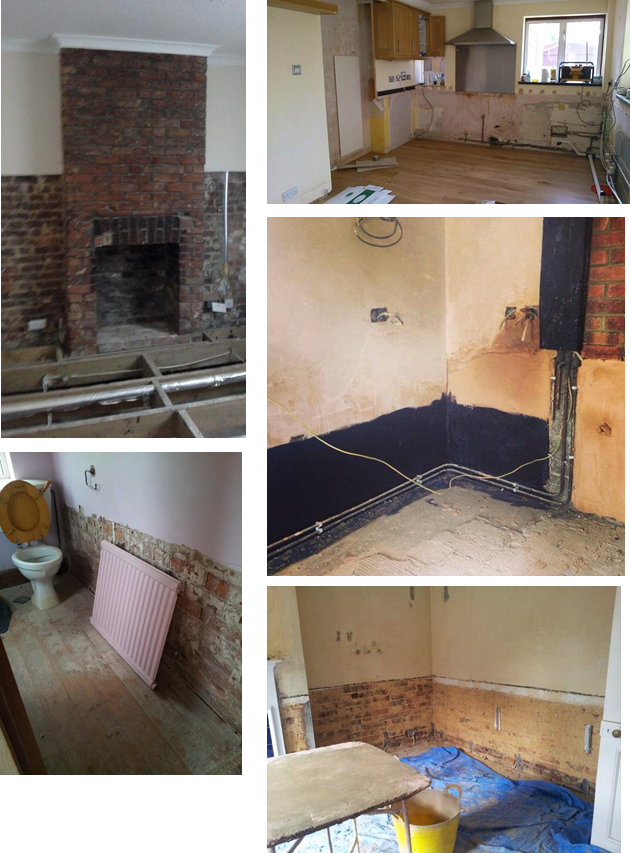
Being flooded can wreck your daily life for at least 9 months whilst your home is being dried out and restored back to ‘normal’  I want to share with you a few of the photos I’ve been sent via Twitter from people who were flooded. These are photos of their homes right now and are from homes in Tonbridge and Somerset.


These people, and so many like them, still face months out of their homes, along with the misery and hardship that brings with it.

This is why I am so passionate about raising awareness of flood risk; to enable individuals and communities to plan, prepare and militate against it. In many cases, flooding can be prevented and in others, by adapting homes to be more resilient to flooding, the impact can be significantly reduced.

For further information visit www.knowyourfloodrisk.co.uk and download a free copy of the Homeowners Guide to Flood Resilience.

Mary Dhonau OBE
Chief Executive, Know Your Flood Risk Campaign
Follow Mary on twitter @floodmary

Follow the campaign KYFR @flooduk