Showing posts with label know your flood risk. Show all posts

Wednesday, 15 April 2015

Strengthening the UK’s Resilience to Flooding

As active members of the Know Your Flood Risk campaign, we closely monitor the undertakings of the group in its quest to raise awareness of flooding on a national level.  

This week, we saw Mary Dhonau OBE, the chief executive of the campaign, chair and speak at a Public Policy Exchange symposium that focused on ‘Strengthening the UK’s resilience to flooding’. 

The event, which was attended by Emergency Planning Officers, the Environment Agency, District and Borough Councils, Civil Contingencies Managers, Local Authority Councillors and members of the insurance industry to name but a few, debated ways to design effective strategies to safeguard the UK against flooding, constructing resilient strategies at the local level and the role of the Lead Local Flood Authorities and other emergency services in a flood crisis to support communities.

Confirmed Mary Dhonau OBE: “The symposium was a great opportunity for people with a wide range of responsibilities and specialisms to come together to share best practice, whilst also gain valuable insights into emergency preparedness at the local level.  With the UK’s vulnerability to extreme weather conditions and the increasing number of flooding occurrences, it was a timely event that discussed all avenues of flooding: – from identifying the risks before they happen, to having a robust contingency or emergency framework in place so communities can respond quickly, when time is of the essence.”

To find out more about the Know Your Flood Risk campaign, click here:
http://www.knowyourfloodrisk.co.uk/our-campaign

Tuesday, 7 April 2015

Flood Risk app listed in The Times' "35 Best Apps for Your Home"

On Friday 3 April, The Times published an article on its website that recommended the "35 best apps for your home."

The article provides advice regarding what free apps you should use if you're looking to buy or sell a property, renting or letting a home, taking out a mortgage, making home improvements or even just redecorating.

We were very pleased to see that the free 'Flood Risk' app from the Know Your Flood Risk campaign - which we are members of - was included in the write-up and featured fourth in the listing.

Also included in the Top 35 were apps such as Cell Phone Coverage Map, FixMyStreet, Stamp Duty Calculator, Mortgage Repayment Calculator and My Room Painter.

The full article can be accessed here.

What is ‘Know Your Flood Risk’?
The campaign is focused on helping people identify if there is a flood risk connected to their home or property. It also provides essential practical guidance to enable individuals to mitigate against or prepare for the risk of being flooded.  A free mobile phone app is available that provides a risk rating using data from a number of qualified flood risk specialists.

The website also contains a host of practical advice, guides and tips for homeowners who may be facing a risk or perhaps wish to delve deeper into finding out what their home’s prospect of flooding really is.

www.knowyourfloodrisk.co.uk

Monday, 16 March 2015

Flood Defences: what will feature in the Chancellor’s Budget?

Here at Landmark, as members of the Know Your Flood Risk campaign, we are fully behind the latest announcement from the ‘Flood Free Homes’ campaign, which urges the Chancellor to think ahead in terms of increasing spending on flood defences and maintenance, in this week’s Budget.

The Flood Free Homes campaign was launched by the Association of British Insurers, and is supported by Friends of the Earth, National Flood Forum, the Property Care Association’s Flood Protection Group, the BRE Centre for Resilience and, of course, the Know Your Flood Risk campaign.

Its aim is to raise the issue of long-term flood defence investment and land and water management, and so the campaign believes that the Budget needs to “set the tone” for future Spending Reviews so that protection against future flooding is seen as a national priority.

Commenting on the news, Mary Dhonau OBE, who is Chief Executive of the Know Your Flood Risk Campaign said: “Having been flooded myself, I know only too well how devastating it can be! It is essential that spending on flood risk and climate change is prioritised by the next Government. Our infrastructure is woefully inadequate and needs urgent investment to make it fit for purpose for both now and in the future!
Mary Dhonau OBE
Continues Mary: “We set up the Know Your Flood Risk Campaign several years ago to help people understand their current and future flood risk.  We not only provide free guidance on how to work out your potential risk, but offer access to a wealth of guides and reports on how to prepare, prevent or recover from incidences of flooding.   As well as an interactive website and free mobile app, visitors can also purchase a property-specific flood risk assessment that provides a clear picture on current risks related to a property or its wider locality.”

www.knowyourfloodrisk.co.uk


Monday, 2 February 2015

‘Know Your Flood Risk’ to address GovKnow Flooding Policy Briefing

“Responding to the Growing Risks of Flooding and Coastal Erosion”
5th February 2015
Carburton Street, London

Mary Dhonau OBE, the chief executive of the Know Your Flood Risk campaign has been invited to speak at a GovKnow Policy Briefing, which will address the growing risk of flooding and coastal erosion across the UK.

The in-depth, policy-led briefing, which takes place on 5 February in London, brings together key policy makers, shapers and stakeholders who have an interest or involvement in managing flood risk and coastal protection, including local authorities, emergency services, business owners based in high-risk locations and policy makers.

Mary Dhonau OBE, who has personally experienced the appalling impact of flooding, will be talking to delegates about how to plan, prepare and mitigate against the risk of flooding, including analysing what information is available to accurately calculate the current and future dangers posed by flooding in specific locations, from county-level down to individual postcodes, communities or streets.
Confirms Mary: “Know Your Flood Risk works with major data providers, including Landmark Information Group, to maintain up to date flood risk modelling data. This ensures that detailed and accurate risk information is accessible on the different types and levels of flood risk across the country.  It is vital that homeowners, local authorities, the emergency services and policy makers are fully aware of how to calculate your flood risk at a community level, and if a risk is present what can be done to help prevent or mitigate against future flood risk.”

Know Your Flood Risk provides information and support on flood recovery and general flood resilience via its acclaimed guides. As part of its bid to educate homeowners, public sector organisations and businesses on their flood risk, Know Your Flood Risk provides access to flood reports, powered by Landmark Information Group’s flood risk data, which enables individuals to assess the flood risk to individual properties, streets, towns or regions. 

With Government figures suggesting that nearly one in six properties in England is at risk of flooding and that flood damage cost England alone £1.1 billion a year, the GovKnow event will examine the threat of flooding and coastal change, re-evaluate the policies and discuss the recent changes, providing a comprehensive insight into what is considered a complex policy issue.

To find out more about the Know Your Flood Risk campaign, or to download a number of free advice guides, visit:  www.knowyourfloodrisk.co.uk

GovKnow Briefing Location: Holiday Inn Regents Park, Carburton Street, London, W1W 5EE
Date: 5 February 2015
Bookings: To book your place at the briefing, click here:


Wednesday, 21 January 2015

Flood Free Homes


I have firsthand experience of being repeatedly flooded out of my home. The ravages of floodwater can have far-reaching consequences for everyone affected, not only in terms of the physical damage caused but also less obvious issues, such as stress and depression.

The first bleak walk back into your waterlogged home is so hard to comprehend, if you’ve not been through it yourself. Your belongings are covered with a thick brown sludge, your furniture is sodden and your home stinks. You watch helplessly as everything you have worked so hard for is thrown into a skip. Worse still, you lose items that no insurance policy can ever replace: a child’s first drawings; photographs of relatives who are no longer with us; and it is these experiences that are heart-breaking.

"Since the 1990’s, when my first flood happened, I have spoken to and visited countless people who have their lives devastated by being flooded. They have spoken to me of their utter despair at having lost their home, their ‘sanctuary’, in this way. Flood water is a silent, indiscriminate burglar that takes no prisoners, and doesn’t care whether its victims are the young, old, disabled, rich or poor. It seems to malevolently wreck the lives of thousands of people, year in, year out. It is impossible to put an accurate price tag on the cost of being flooded, but so many people tell me that it the worst singular experience in their lives and the memory of it will stay with them forever.

Extreme weather events are becoming too common place to be ignored, and flooding is the biggest natural threat faced by the UK. It is my belief that flooding is already happening more regularly and last winter’s endless TV footage clearly demonstrated the demands made on our country by the wettest winter on record accompanied by high tidal surges. Never has it been more essential to invest in both building and maintaining flood defences. If we are to avoid vast swathes of the country being brought to its knees on a regular basis then we must invest heavily in all aspects of flood risk management.

In this small country of ours, we have already built too many homes in inappropriate places and the knock on effect on individuals and communities has been devastating and costly. It is time to put an end to this short-sighted irresponsibility. We urgently need a cross party consensus for managing floods, one that will address all forms of flood risk, one with an ambitious  long term goal that will embrace innovation and investment to reduce flood risk."

Mary Dhonau OBE HonRICS
Chief Executive Know Your Flood Risk Campaign


Chair of the Flood Protection Group The Property Care Association

Monday, 19 January 2015

‘Mary Queen of Floods’ makes waves at Whitehall

Reception held at the House of Commons heard calls for an end to housing development on flood plains and increased flood risk funding
On January 20th, the Association of British Insurers (ABI) launched its Flood Free Homes campaign, which raises the issue of long term investment in flood defence and land and water management. ABI is calling for £1 billion per year to be spent on managing flood risk by 2025; cross party consensus on long term solutions; and an end to new developments in areas at risk of flooding. The campaign launched at the House of Commons yesterday, is supported by Know Your Flood Risk, Friends of the Earth, National Flood Forum, the Property Care Association’s Flood Protection Group.
Mary Dhonau, OBE, chief executive of Know Your Flood Risk, was asked to speak at the House of Commons reception, attended by forty MPs. Mary met with Roger Williams, MP, to discuss the current risk to homeowners, based on the latest flood risk modelling data, and joined ABI’s call for an end to housing development on flood plains and an increase in government funding for flood risk management.
Know Your Flood Risk works to raise awareness of flood risk, by lobbying the government and the insurance industry and providing homeowners and businesses with practical guidance on their risk of flooding and how to mitigate the risk of their properties being flooded. As part of its mission to inform home owners of the risk to their property, Know Your Flood Risk works with major data providers, including Landmark Information Group, to maintain up to date flood risk modelling data and ensure that property owners have access to information on the different types and levels of flood risk. 
Environment Agency data shows that approximately 2 million homes in England and Wales are at risk of river and sea flooding, with an additional 2.4 million homes at risk of surface water flooding. One in four homes in the UK are at risk of surface water flooding and ground water flooding, as well as wave overtopping. However, a survey undertaken by the Know Your Flood Risk Campaign revealed that 83 per cent of homeowners do not believe their homes are at risk of flooding and 68 per cent had no measures in place to minimise the risk to their home. Importantly, although 95 per cent of homeowners surveyed by Know Your Flood Risk had contents insurance, 45 per cent do not know whether their insurance policy covers flood damage. 
In addition to advising homeowners on their flood risk, Know Your Flood Risk provides information and support on flood recovery and general flood resilience via its acclaimed guides. As part of its bid to educate homeowners and businesses on their flood risk, Know Your Flood Risk provides access to flood reports, powered by Landmark Information Group’s flood risk data, which enables owners to assess the flood risk to their individual property.
Explaining the key issues behind the Know Your Flood Risk campaign, Mary Dhonau said, “Never has it been more essential to invest in both building and maintaining flood defences. If we are to avoid vast swathes of the country being brought to its knees on a regular basis, then we must invest heavily in all aspects of flood risk management.”
“Too many homes have been built in inappropriate places and the knock on effect on individuals and communities has been devastating and costly. We urgently need a cross party consensus for managing floods, one that will address all forms of flood risk, one with an ambitious  long term goal that will embrace innovation and investment to reduce flood risk.”
In follow up to the reception at the House of Commons, Mary Dhonau will publish a blog on ABI’s Flood Free Homes campaign website, in which she shares her personal experiences of having her home flooded and echoes ABI’s calls for increased investment in flood defences and flood risk management and an end to building new properties in areas at risk of flooding.

Monday, 12 January 2015

JBA Comprehensive Flood Map launches on Landmark Labs

Sample dataset published to provide an insight into the breadth of the latest flood data from JBA

Landmark Information Group, the UK’s leading supplier of digital mapping, property and environmental risk information, has released on to the Landmark Labs portal a sample dataset of JBA Risk Management Limited’s latest Comprehensive Flood Map of Great Britain, to enable land, property and environmental professionals to preview JBA’s extensive flood risk data and give feedback on its potential applications and suitability.

By accessing the sample data on Landmark Labs, users have the ability to interrogate JBA’s extensive flood datasets in the vicinity of Goring-by-Sea, showcasing the highly detailed flooding extents and associated flooding depth information.  A variety of different flood scenarios are presented, including  pluvial flooding (at 1:75, 1:200 and 1:1000 year return periods); undefended fluvial flooding (at 1:20, 1:75, 1:100, 1:200 and 1:1000 year return periods); and undefended coastal flooding risk hazards (at 1:75, 1:100, 1:200 and 1:1000 year return periods).

Mark Burnard, Senior Product Manager at Landmark Information Group said: “The sample JBA flooding data in Landmark Labs provides a preview of the new datasets that are now available to our customers, and gives them the opportunity to take a closer look at the data and tell us what they think.  JBA’s extensive flood data can provide our users with an even greater breadth of flood risk assessment information, in order for them to provide the best advice to their clients.

The sample JBA flood data will be available on Landmark Labs until the end of February 2015, enabling environmental professionals, insurers, planners, developers and other professionals to become familiar with the dataset and offer comments or feedback, which will ultimately guide the way in which we integrate this data into our products.”

For more information visit www.envirocheck.co.uk and www.jbarisk.com.

Friday, 12 December 2014

New 'Flood Risk' mobile app helps the public stay 'flood aware'

Free mobile app launched from Know Your Flood Risk aims to help homeowners, property purchasers and professionals quickly identify potential risk

With the Met Office predicting wetter-than-average conditions for December and January, and many parts of the UK recovering from the arrival of the recent ‘weather bomb’ gales, the team at the Know Your Flood Risk campaign has announced the launch of a free-to-download Flood Risk mobile app to help individuals quickly assess whether they are at potential risk of flooding.

With the government pledging to publish more flood-related information to the wider public to improve the quality of public-focused services, the Flood Risk app, which is available to download from iTunes, provides an accurate view of current flood risk, using a range of data sources.

The app lets you input your postcode, where it will immediately assess the potential risk of flooding within a 25m zone of the given location.   The data is taken from Landmark Information Group’s ‘Know Your Flood Risk®’ report, which uses current data sources from National Flood Risk Assessment (NaFRA), the Environment Agency and surface water flooding data from JBA risk management.
 Flood Risk app
Mary Dhonau, Chief Executive of the Know Your Flood Risk campaign said: “Having been flooded on several occasions, I can personally vouch that being flooded is an absolutely appalling experience! Flood risk is not an issue just for those that live by the sea or near a river, but can affect homes as a result of surface water flooding, which many people don’t expect or plan for.  I therefore urge everyone to take a look at the app so they can instantly see whether they may be considered at risk.  Forewarned is forearmed, therefore if you fully understand your risk, you can plan prepare and take moves to protect against it.”

As well as providing a mapped view of a location’s flood risk, the Flood Risk app also provides access to live UK Flood Warnings from the Environment Agency, in addition to access to a free ‘Homeowner’s Guide to Flood Resilience’. This Guide offers practical advice on how homeowners can prevent and protect their home from flooding. It is also possible for users to purchase a detailed Flood Risk Report via the app, should they require a more detailed analysis of their home’s flood risk.
 Flood Risk app
According to the Environment Agency, approximately 5.2 million properties in England – which equates to on one in every six properties – is at risk of flooding. Of these, 2.4 million properties are at risk of flooding from rivers or the sea, while a further 2.8 million properties are considered vulnerable to surface water flooding.
 Flood Risk app
The Know Your Flood Risk Campaign provides consumers and professionals with a range of resources to help them prepare for, or mitigate the risk of flooding.  For more information, visit www.knowyourfloodrisk.co.uk
 Know Your Flood Risk

To download the app, click on: https://itunes.apple.com/app/id941612469

Tuesday, 2 December 2014

Flood Defence Spending: BBC Radio Five Live

In advance of the Flood Defence Expo (4-5 December, London Excel), Mary Dhonau, chief executive of the Know Your Flood Risk campaign was invited as a guest on to BBC Radio Five Live's Breakfast show to discuss today's news regarding a £2.3bn investment in flood defences.

In an interview with Adam Parsons, Mary Dhonau discusses what the £2.3bn investment will mean for certain regions of the UK, which has been announced by the Treasury as part of the 2014 National Infrastructure Plan.

The full interview can be listened to using the BBC Five Live 'listen again' feature, during the next four weeks: http://www.bbc.co.uk/programmes/b04sv04v - (click to 01:49:00)

Mary Dhonau OBE
For more details regarding the Treasury's announcement, click here:
http://www.bbc.co.uk/news/business-30282701

For more details regarding the Know Your Flood Risk Campaign, or to access a free Flood Resilience Guide, visit: http://www.knowyourfloodrisk.co.uk/

Friday, 28 November 2014

What Is It Like To Flood?

On the 4th and 5th of December, the Flood Defence & Prevention Expo presents a range of solutions to widespread flooding problems from many of the UK’s leading flood prevention companies and experts.  The two day-event, which is taking place at the Excel Centre in London, is also hosting an extensive seminar and workshop programme to highlight new, cost-effective ways to help prevent and manage floods.

Mary Dhonau OBE, Chief Executive of the ‘Know Your Flood Risk’ campaign – which is supported by Landmark Information Group – will be speaking at the event.   During the Flood Defence Expo, Mary will be discussing what it's like to flood, how to plan, prepare and mitigate for it. 

Mary has been flooded herself on many occasions and has extensive experience in supporting and advising the victims of flooding during their recovery.
Mary Dhonau OBE
Explains Mary: “Being flooded is an appalling experience! The presentation will describe what individuals who do flood have to go through and will go on to give examples of how to plan, prepare, mitigate and become resilient to being flooded. I will also be urging everyone to download a copy of Know Your Flood Risk’s free Guide to Flood Resilience, which is the best guide of its type in the country for providing practical, hands-on advice to identifying your risk, through to putting measures in place to resist and overcome future floods from impacting your lives.”

Mary has represented the ‘voice of the flood victim’ for many years and is affectionately known as `Mary Queen of Floods`. She was awarded an OBE for services to the environment in the Queen`s Birthday Honours list in 2009.

In addition to her role as Chief Executive of Know Your Flood Risk, Mary also chairs the Flood Protection Group for the Property Care Association, and is a member of the Regional Flood and Coastal committee for Anglian Northern.   She also runs a consultancy (MD Associates) specialising in raising awareness of flood risk, how to militate against it and recover from it.

Mary’s presentation takes place on Thursday 4 December @ 14:00 in Seminar Hall Three.

To find out more about the Flood Defence Expo or to book tickets to attend, visit http://www.flooddefenceexpo.co.uk/.


Thursday, 16 October 2014

Flood - protect or prepare

I think we all know by now that flooding is a real issue. There are all sorts of statistics bandied about, such as 5,000,000 properties being at risk of flooding and 1 in 7 businesses having been harmed by flooding, but the reality is that it happens and it hurts. The changing climate means that more deluges are on their way, so that some previously dry properties will become wet in the future. Thankfully, it is now safe to buy a house: there are great reports available that highlight any risks and say what can be done about them.

But what can be done? Knowing about the problem is one thing, but it is solving it that really matters, especially if you already live in a house under threat. The good news is that there are ways to live with flooding.

Knowing like Noah
When you know the waters are likely to rise, you can protect your home and keep it dry. This is often called flood resistance and works by making your house waterproof, very much like a boat. Most buildings are full of far more holes than just the windows and doors, all of which have to be sealed if you want to stay dry. It can be fairly obvious to deal with the water you can see, but with most floods of any duration, the ground becomes saturated and water rises vertically up through the foundations.


The walls are all fairly easy to make water tight, such as fitting waterproof covers to doors and air-bricks. Costs usually range from about £2,000 for providing covers to air bricks, doors and windows, as well as fitting non-return valves to foul pipes and making sure the bricks are well pointed. These are the basics and can be enough for short floods from rainfall or rivers. Longer floods or rising groundwater will also need the floor to be made water tight, which is often highly disruptive and can cost well over £10,000.

These resistance measures will only work for comparatively short periods – days to weeks – as water will eventually get in. A ‘sump and pump’ arrangement will help to get rid of such water from a low-point in the foundations, but remember that a fair amount of cleaning and drying will be needed after every flood event. There is usually significant damage to gardens, garages and outbuildings.

Keeping the waters out will only be feasible for floods of less than about one metre deep, as beyond this the water becomes so heavy that is crushes the walls and can collapse the entire building. Worth avoiding! In deep floods, or when costs are prohibitive, the only sensible option is to adopt resilience measures.

Cleverer than Canute
Resilience works by allowing the water into your house, but being prepared for it. It is impossible to avoid some disruption whilst your house is full of water, but with careful preparation it need not be catastrophic. There is a pub in York that floods almost every year and has got its resilience measures down to such an art that they open the day after the waters recede.

Resilience works by changing the fabric of a building to make it safe during the flood, then easy to clean and dry afterwards. Common changes include moving wiring and power points higher up the walls, replacing normal plaster with waterproof varieties and taking all wood away from the flood zone (including doors and floor boards). The latter can be replaced by alternatives that do not absorb water, such as plastic or glass. It is also worth fitting non-return valves to the foul water pipes, since you do not want any return visits from the sewer!

Most flood waters are extremely dirty and leave behind a drift of mud and muck. It is therefore important to be able to sweep out and hose down the flooded areas, so nooks and crannies should be avoided. A sump and drain to wash the dirty water away will also be useful.

The cost of refitting a house with resilience measures will vary massively, depending on what needs changing. However, costs are unlikely to be less than £5,000 to do the job properly.

One size fits one
The solution to your flood problem will depend on many factors, from the type of flooding expected to the construction of your building. It is worth carrying out detailed research and probably consulting an expert, since making you home resistant or resilient is not generally a DIY undertaking. Experts will have to carry out much of the work, so it is worth talking to them to begin with.

The first step is to understand your flood risk – its type, depth and frequency – then design the most effective measures to deal with it. Landmark Information Group can help you take the next steps for your property, but there is also a lot of detailed generic information and case studies at www.knowyourfloodrisk.co.uk


Flooding is becoming a major concern of insurers and lenders, as well as affecting the value and saleability of your house in the future. The cost of action may be daunting, but is it nothing to the financial and emotional cost of not taking action. 

Author: Angus Middleton, Consultant, Argyll Environmental.

Monday, 28 April 2014

After the Winter Floods

The Floods of December '13, January, February and March '14 seemed never ending.  The media extensively covered the relentless weather that battered our country, and day-by-day we learned of the devastation that floods from both the sea and rivers brought with them.

We saw graphic images of homes wrecked over the Christmas and New Year period and deep floodwater covering vast swathes of Somerset for weeks on end, cutting off communities from the outside world and ruining the livelihoods of so many in the farming community.  

We watched as the Thames wreaked havoc in Egham, Wraysbsury and Datchet, and the Severn rising to record breaking heights in the Midlands.

To many people, the floods of the Winter of ‘13/14 are now nothing more than a memory and a conversation topic. I ask you to spare a few moments to think about what those homeowners are going through now – at the end of April. Flooding is not just about when the media and ministers visit.

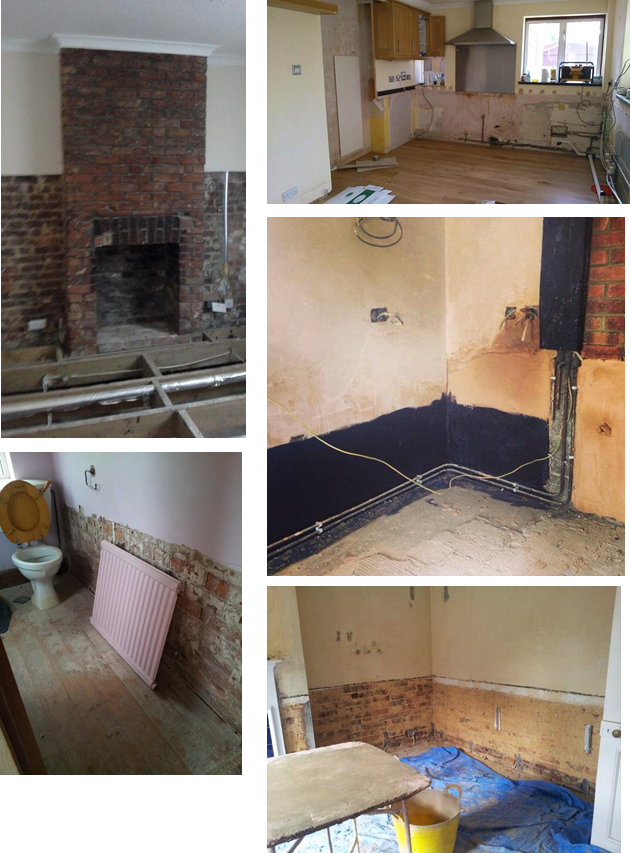
Being flooded can wreck your daily life for at least 9 months whilst your home is being dried out and restored back to ‘normal’  I want to share with you a few of the photos I’ve been sent via Twitter from people who were flooded. These are photos of their homes right now and are from homes in Tonbridge and Somerset.


These people, and so many like them, still face months out of their homes, along with the misery and hardship that brings with it.

This is why I am so passionate about raising awareness of flood risk; to enable individuals and communities to plan, prepare and militate against it. In many cases, flooding can be prevented and in others, by adapting homes to be more resilient to flooding, the impact can be significantly reduced.

For further information visit www.knowyourfloodrisk.co.uk and download a free copy of the Homeowners Guide to Flood Resilience.

Mary Dhonau OBE
Chief Executive, Know Your Flood Risk Campaign
Follow Mary on twitter @floodmary

Follow the campaign KYFR @flooduk

Tuesday, 15 April 2014

Know Your Flood Risk’s “Flood Recovery Guide”: a whirlwind account from concept to delivery

Having been flooded myself, I know only too well what an appalling situation it is. It can literally turn people’s lives upside down if they are affected. When I was flooded there was no information anywhere as to what to do and when. It has long been my ambition to create a downloadable Flood Recovery Guide that will help victims of flood through those first bleak weeks.

Sadly, never has the timing been so good…

Working with Carly Rose, our PHD campaign researcher, (yes, she has also been flooded),we put together a guide of all the best information we could find and added some practical hints and tips based on our own experiences.  Then the terrible the coastal surge happened in November. The talented team at the Know Your Flood Risk offices rushed through the design stage and within a matter of days hard copies had been produced and delivered to Boston in Lincolnshire, where the worst of the tidal flooding had occurred.

From that moment my feet did not touch the ground for several months, as the cruel winter floods of 2013/14 just didn’t stop coming. The guide was in great demand - we got a request for hard copies from Tonbridge and Yalding following the dreadful Christmas day floods there.  Also in demand were the media requests for me to talk about the guide and to give practical advice via TV, radio and in many national papers.  I became a regular guest on BBC breakfast and on ITV’s ‘Daybreak’. I went onto every news channel, appeared on The One Show Live Flood Special (where we managed to ship more free copies of our guide to residents in Wraysbury), spoke on the Today programme, videoed by the Sunday Telegraph and became a regular speaker on consumer programmes on Radio 5. I have even been in the Washington Post and spoken on Russia Today! My new (and I hope affectionate) nickname is now ‘Mary Queen of Floods’…

The guide not only covers the practicalities of recovering from a flood, including a section for those without insurance, but the emotional rollercoaster that everyone goes through for the weeks and months following a flood. It can be extremely stressful for everyone in the household, not just physically but emotionally too. Many people have described it as a ‘kind of bereavement’ – recent decorations, wedding photos, treasured family heirlooms or mementoes, school projects – all washed away forever and sometimes, in only a matter of minutes. One resident from Yalding said: "I thought it was a great guide with loads of useful information to help cope with the aftermath of flooding. I particularly appreciated the bit about The Emotional Roller-coaster. It helped me to realise how I am feeling is normal and understandable. Thank you."

What was apparent with the widespread flooding this time around was the power of social media.  In the past, floods surge in but once the media leave everyone forgets about the clean-up and recovery. Thanks to social media, people are now able to post live warnings, share tips and advice and keep the situation in the public eye which is important. Thanks to Twitter alone, our Flood Recovery Guide reached an audience of over ½ million people thanks to mentions and re-tweets from hundreds of sources including the Environment Agency, the media, local authorities and the Police. 

Being flooded is just awful but I’d like to think that the new guide helped those during their slow road to recovery and that afterwards, those at risk will also take full advantage of the Know Your Flood Risk campaigns ‘Homeowners Guide to Flood Resilience’ to help reduce the impact any future floods will bring.

Mary Dhonau OBE
Chief Executive KYFR
Follow Mary on twitter @floodmary and The Know Your Flood Risk Campaign @flooduk
Visit www.knowyourfloodrisk.co.uk for more practical guidance and advice.

Monday, 31 March 2014

Flood Repair and Renew Grants for homeowners and businesses

On 12th February 2014, the Prime Minister announced a new scheme to provide grants of up to £5,000 to homeowners and businesses that had been flooded. The repair and renew grant is being provided to fund additional flood resilience or resistance measures for homes and businesses that have been flooded since 1st December 2013.

This is a one-off scheme to cover needs arising from the flooding of winter 2013-14. Alongside this announcement the Government is continuing to work with the insurance industry to consider how resilient repair could be funded and targeted in the future in the context of developing proposals for Flood Re, the proposed solution for affordable flood insurance for domestic properties, in order to ensure that high-risk households are supported to prepare for severe weather and flooding in the future.

The grants go live on 1st April 2014

The aim is that the application process should be simple. In the first instance, people should contact their local authority (usually the District Council) who will operate the scheme locally providing advice on how they will take it forward.

The grant is intended to cover the additional cost of making a property more resilient to flooding (that is, the amount above the cost of standard repairs that an insurance company will pay for) as it is reinstated. It is not to cover any losses by the householder, it is not compensation for being flooded nor is to cover the ‘excess’ element of an insurance policy. Furthermore, the grant will not cover repairs to annexes, outhouses, garages or other such buildings. 

The application form will have a list of suggested measures.  People may find it useful to consult their insurer/loss adjuster as they start the repair process to see what type of additional work could be combined with the standard repairs that the insurer is funding.

If this is not possible, the Property Protection Adviser or the National Flood Forum will give an indication of the type and costs or measures people could install and they should use this when they submit their application to the local authority. For more advice, the ‘Homeowners Guide to Flood Resilience’, developed by the Know Your Flood Risk Campaign, will give you a full list of the range of products available coupled with useful case studies. It is well worth visiting the Flood Protection Association website which contains a list of approved members who supply and fit flood protection products.

For terraced property and in other situations where it is beneficial to do so, people may collaborate in how they use individual grants (consulting their Local Authority first) to protect their properties.

If people wish to have an independent survey prior to starting work to see what is necessary, or have the completed work validated for their insurer through a Flood Risk Report,  people are advised  to talk to the Local Authority before making any commitments.


Mary Dhonau, OBE

Chief Executive, Know Your Flood Risk campaign